
Applicable Models:
2003 - 2007 Ford F-250, F-350, F-450, F-550 Super Duty
2003 - 2005 Ford Excursion
2004 - 2010 Ford Econoline E-350, E-450
Applicable Engine(s):
6.0 liter Power Stroke V-8, diesel
Fuel Filter Part Numbers:
Super Duty trucks use Motorcraft FD-4616 (filter set with o-rings)
E-Series vans use Motorcraft FD-4606 (filter set with o-rings)
Filter Housing Cap:
Ford 3C3Z-9G270-AA (secondary housing only)
6.0 liter Power Stroke engines utilize a two stage fuel filtration process. The first stage of filtration occurs at the fuel conditioning module where fuel is drawn from the tank and through a 10 micron filter by means of an electric fuel pump. At this time, water droplets settle to the bottom of the conditioning module where they will collect and remain until the unit is drained.
Fuel is then delivered to the secondary fuel filter housing mounted to the top of the engine. On Super Duty trucks, the secondary fuel filter and oil filter housings share a single casting. Here, fuel is forced through a 4 micron filter before moving to one of two outlet fittings; each outlet fitting supplies fuel to one of the two cylinder heads. Excess fuel is returned to the tank by the pressure regulator integrated into the secondary filter housing.
Filter Service Requirements
The fuel filters on 6.0 liter Power Stroke engines should be replaced every 15,000 miles when conventional diesel fuel is consumed and every 7,500 miles when biodiesel blends in excess of B5 (5% biodiesel) are used. Note that renewable diesel fuel is chemically identical to conventional diesel fuel, not biodiesel, and can be treated as such so long as it has no biodiesel content in the blend.
Furthermore, it is noteworthy that 2003 and 2004 model year engines were not certified for biodiesel use of any concentration. There are materials in the fuel conditioning module that are not compatible with biodiesel - continued use will cause these materials to corrode and deteriorate, potentially causing irreparable buildup in the fuel conditioning module. The conditioning module was changed for the 2005 model year so that biodiesel blends of up to, but no more than 5% biodiesel by volume could be used.
If water contamination of the diesel fuel is or has previously been a concern, or if biodiesel blends in excess of B5 are to be used by the engine, consider more frequent service intervals to monitor and maintain system health. Note that the filter housings found on the E-Series version of this engine are a bit different. E-Series engines therefore use filter set FD-4606 while Super Duty trucks/Excursions use FD-4616.
Fuel Filter Replacement
I highly recommend that these procedures be performed when the fuel tank level is less than 1/2 full. In some instances it is possible for a siphon effect to occur while draining the primary filter housing (HFCM). Instead of draining off the quart of fuel that the module holds, fuel can begin to siphon from the tank and this effect will continue until the fuel tank level reaches a point in which the siphon is lost. This phenomenon is more common than you may think, so don't open the drain plug and walk away for any period of time.
If siphoning does occur, it can be stopped by removing the cap from the filter housing - just be prepared for some fuel to spill. In my experiences, removing the fuel tank cap does not stop nor prevent this from happening.
Locate the primary filter housing on the driver side frame rail. Note that this unit is referred to as the horizontal fuel conditioning module (HFCM), except on E-Series vans.
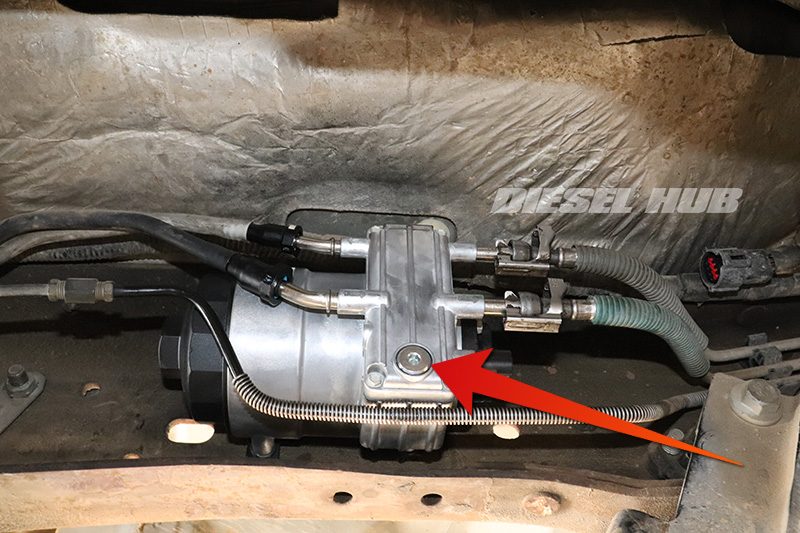
Place a suitable container beneath the HFCM to catch fuel as it drains from the housing. Remove the drain plug with a 6 mm hex key/driver ("Allen"). Allow the module to drain completely before continuing. If the filter cap is removed before the housing drains completely a significant amount of fuel will spill and travel down the frame rail.
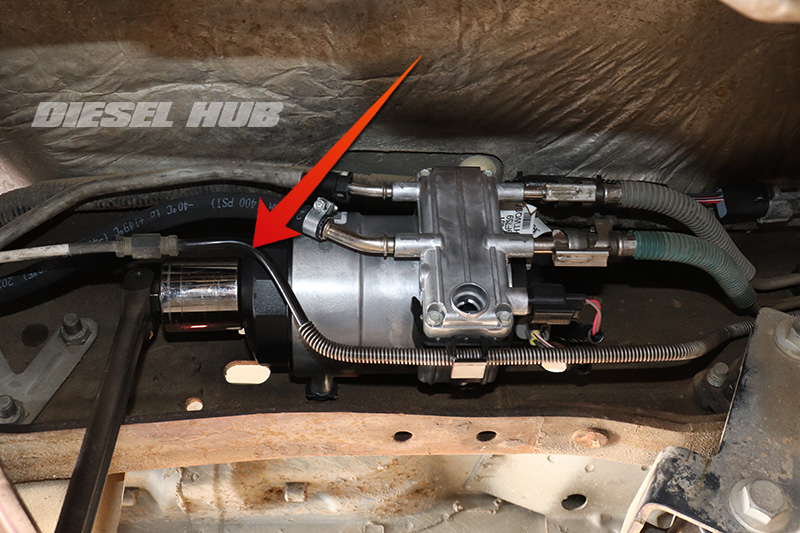
Once the housing has drained completely, remove the filter cap with a 36 mm socket. I recommend placing some shop rags between the cap/housing and the frame - it is inevitable that some fuel is going to spill from the housing once the seal on the cap is broken. Once the cap is completely loosened, pull it and the fuel filter out of the housing. Separate the filter from the cap by pulling the two apart.
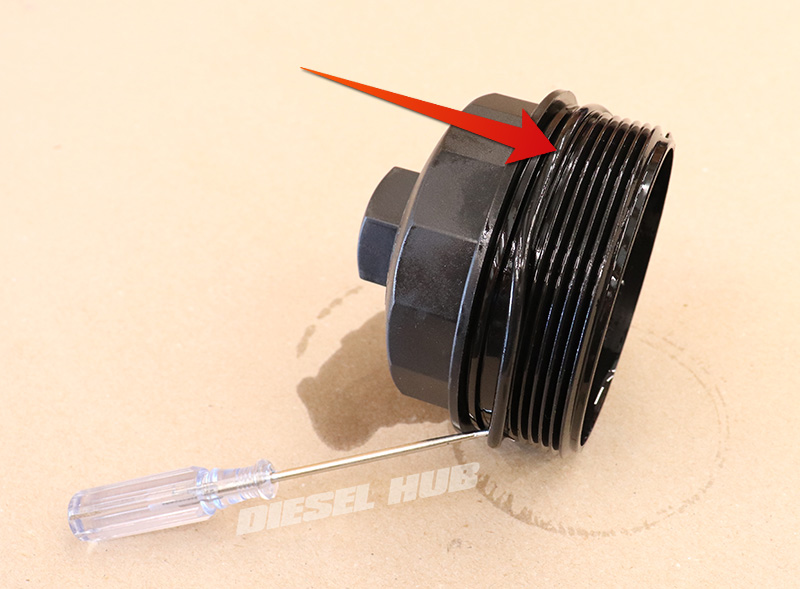
Remove and discard the old o-ring seal from the cap, then dry the exterior with a clean rag/shop towel.
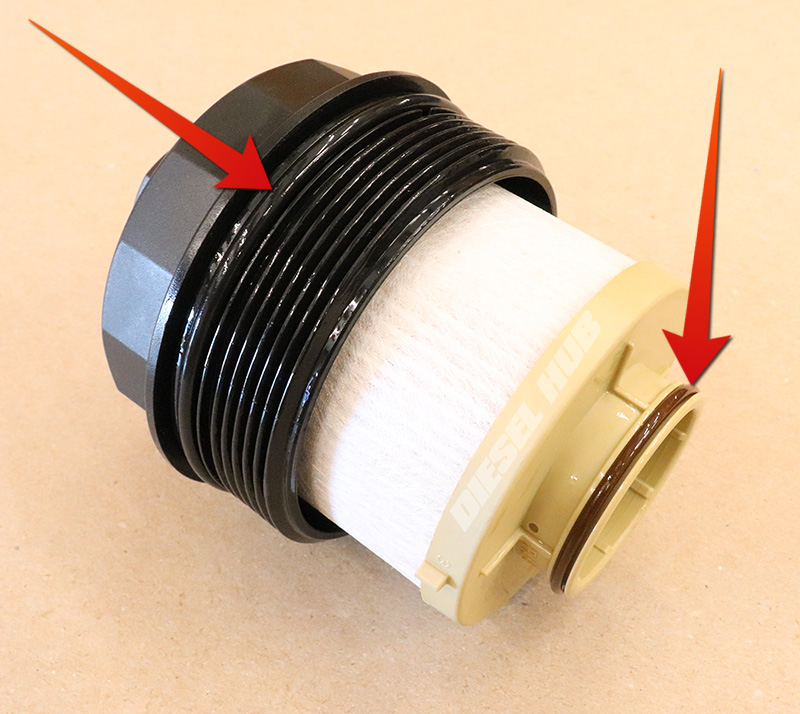
Coat the new cap o-ring with clean motor oil, then install it. Next, install the replacement fuel filter into the cap (as pictured); it will "snap" into place when properly secured. Lastly, coat the o-ring seal at the base of the filter element with clean motor oil. Reinstall the filter in reverse order; torque to 19 lb-ft (25 N-m).
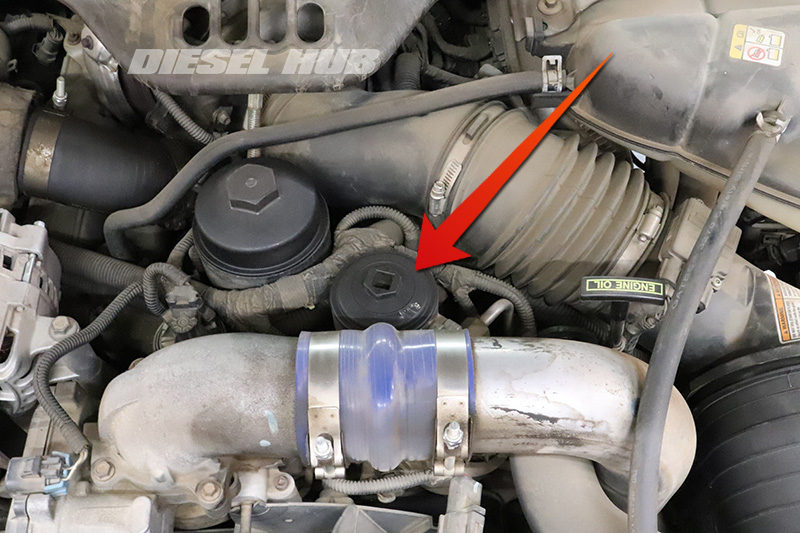
Locate the secondary fuel filter mounted to the top of the engine. On a Super Duty it is to the driver side and slightly forward of the engine oil filter housing. Although the cap has a feature that will accept a 1/2 inch square drive socket, I recommend utilizing the nut formed into the center of the cap. It uses a 24 mm socket and is less susceptible to stripping than the square drive feature.
Remove the cap with a 24 mm socket, followed by the fuel filter itself. Note that the housing will retain some fuel, so have a rag handy to prevent fuel from dripping on the engine.
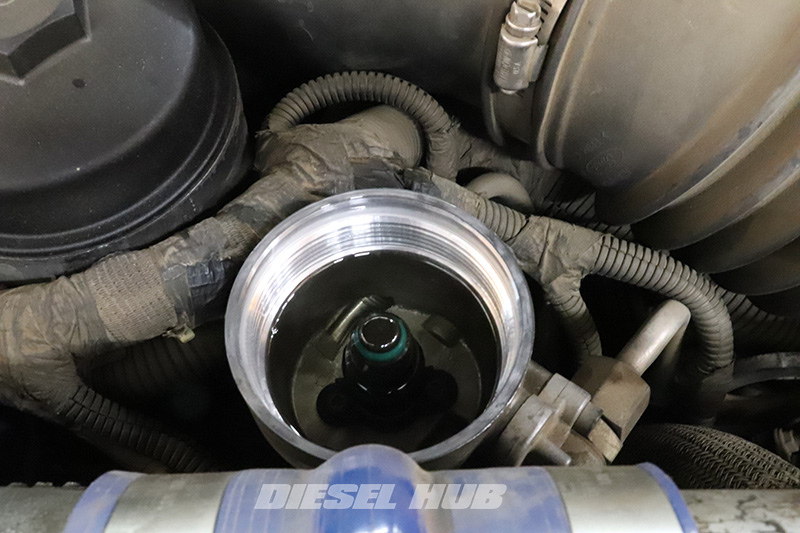
Use an extraction tool to completely drain the secondary fuel filter housing, then install the new fuel filter. As with the primary housing, replace the o-ring for the fuel filter cap with the replacement included with the filter kit. Reinstall the cap and torque to 10 lb-ft (14 N-m).
Bleed the fuel system by positioning the key to the "run" position. This will force the fuel pump to turn on for approximately 20 seconds. While the pump is running, check for leaks around both the fuel caps and the drain plug on the HFCM. When the pump stops running, turn the key "off", then back to the "run" position. Repeat this process 5 to 10 times - you'll note the sound of the pump changes once all the air has been removed from the system. After starting the engine for the first time, check for leaks around both housings.


Editor, Diesel Hub