Fuel must also be of sufficient quality to auto-ignite and do so in a clean and efficient manner. Poor combustion can result in a loss of power, lower fuel efficiency, excessive accumulation of engine deposits, and could damage modern emissions equipment. The ignition quality of diesel fuel is identified by its cetane rating. The higher the cetane number, the less delay there is between the time fuel reaches its autoignition temperature and the time combustion is initiated. Fuel with a poor cetane number (lower) therefore has a longer ignition delay.
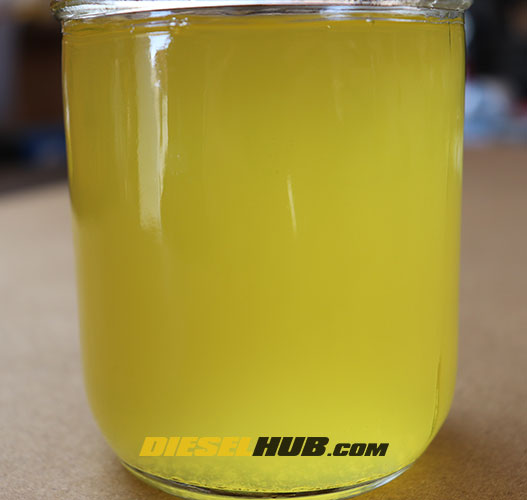
Diesel fuel should be transparent and not cloudy. If a sample is collected from the fuel tank, some light sediment in the sample vessel is acceptable. If a fuel sample is recovered from any point where it has undergone filtration, it should be perfectly clean to the naked eye. The actual color or diesel fuel can vary. On-highway petroleum diesel is typically a light yellow color but may also be described as having a green tinge. Off-highway diesel fuel is intentionally died red so that it is easy to distinguish.


The color of pure biodiesel (B100) varies significantly depending on the feedstock(s) it is produced from, but is generally a light gold to brown color. Pure renewable diesel (R100) is perfectly clear and resembles water. Additive packages and the blending of fuel can cause color variations, but one thing remains common - the fuel is transparent, not murky or cloudy.
Sources of Contamination
While the most common source of fuel contamination is water, other sources include:
- Biodiesel
- Microbial growth
- Sediment (dust, dirt, debris, rust, wear metals, etc)
- Constituents of old fuel
Water
Diesel fuel is hygroscopic and therefore will display the propensity to absorb water from the ambient air it is contact with. The rate at which water is absorbed is largely a product of the humidity and temperature of the ambient environment and the manner in which the fuel is stored. A storage tank that is readily vented to the atmosphere will allow a higher degree of air circulation than one that is sealed. Likewise, fuel will absorb more water when it is readily available, i.e. water absorption is more of a concern in areas where the ambient air is very humid than those where it is very dry. Water intrusion is therefore a much greater concern in wet and cold conditions than it is when its sunny and dry.
Water absorption is entirely normal and to be expected; this is the reason why diesel engines have fuel-water separators incorporated into the filtration system. It does not readily mix with diesel fuel at normal intrusion rates but an emulsified mixture can be formed if enough water becomes trapped in the system. Water is heavier than diesel fuel and will generally settle at the bottom of tanks and water separators.

When water contaminates fuel in larger concentrations and the conditions are appropriate, it can form an emulsified water-fuel mixture. In addition to its cloudy appearance, such a mixture will have poor lubricity and combustion characteristics.
Cloudy fuel is an immediate sign of contamination. At minimum, such fuel is to be drained and all filters replaced. It is also ideal to flush out the bad fuel that remains in the fuel system and replenish it with new, clean diesel before starting the engine. When fuel lacks lubricity, fuel system components wear at an accelerated rate.
Microbes
Microbial growth is a form of secondary contamination that occurs when diesel fuel is contaminated with water. These microbes can be any combination of bacteria, mold, fungus, and yeast. Such contamination is more prolific in undisturbed fuel, i.e. that of which is being stored, and is more common in biodiesel than petroleum diesel. When conditions allow, microbial activity can flourish in pockets of water found in the fuel (typically at the bottom of the tank of vessel). In addition to filter clogging issues, some microorganisms may produce acids that can cause corrosion in fuel system components.
Biodiesel
Biodiesel has a limited storage life and becomes a contaminant if it is allowed to degrade. It is not commonly sold in its pure form, but rather as a blending agent in concentrations of up to 20% biodiesel (B20). Biodiesel also has poor stability in renewable diesel blends, which can cause impurities to precipitate. In addition to filter clogging concerns, degrading biodiesel can increase the acidity of fuel blends and severely reduce its lubricity.

Furthermore, biodiesel is a strong solvent and will, even in small concentrations, dissolve deposits in the fuel system and sediments in the fuel tank. This typically results in filter plugging until the sediment content in the fuel is depleted. Other signs of biodiesel contamination include a lack of lubricity, hazy or cloudy appearance, and a fuel that is orange to amber in color.
Sampling & Evaluation
Any good mechanic or technician will verify fuel quality as part of a basic diagnosis, especially if there is a suspected fuel system related condition. Testing fuel quality does not have to be done by a laboratory nor does it take special equipment or knowledge; simply verify that the fuel looks correct, feels correct, and that there is not any contamination.
Fuel samples are most readily collected by draining the fuel-water separator into a clean, clear jar for visual inspection. The lubricity of the fuel can be tested by dipping a gloved finger (i.e. nitrile) into the sample and rubbing it against the thumb. If the fuel has good lubricity, the finger tips should glide across one another without restriction. If the finger tips have a tendency to stick together, don't glide smoothly, or the fuel is otherwise restricting this motion, the fuel in question does not have adequate lubricity. While this is in no way a scientific measurement, its a good field practice that will help spot common sources of fuel contamination.
Fuel that is cloudy, hazy, oddly colored, or that has a pungent odor should be treated as contaminated. Contaminated fuel should be drained, appropriately recycled, and clean fuel should be flushed through the system prior to starting the engine. Attempts should be made to find the source of contamination; is the fuel old? Where did it come from? Is it biodiesel or a biodiesel blend? If wear metals are present further diagnosis should be pursued to uncover the source.
Fuel can be collected and sent in for laboratory evaluation, although this can be relatively expensive and "bad" fuel is quite easy to spot. Also note that water lingering in the bottom of the sample jar is entirely normal and unavoidable - the water-separator is doing its job.
Avoiding Fuel Contamination
Fuel contamination will cause short and long term effects, including accelerated wear and diminished component life. Correcting contamination issues promptly is as equally important as taking steps to avoid contamination. Knowing the blending contents of fuels can help avoid biodiesel, especially for vehicles that are driven infrequently. The Department of Energy's biodiesel locator is useful in identifying the constituents in fuel blends.
Avoid refilling vehicles from portable fuel cans, which often get stored in conditions where they become dirty. If these, or any other storage tank is exposed to rain water, contamination can occur. Draining the water-fuel-separator at oil change intervals is also useful in actively monitoring fuel quality. While supplemental fuel additives are a great way to improve fuel quality, over-treatment can be a source of contamination; always use fuel additives at the manufacturers recommended dosing rate(s).