Spin-on vs Cartridge Type Oil Filters
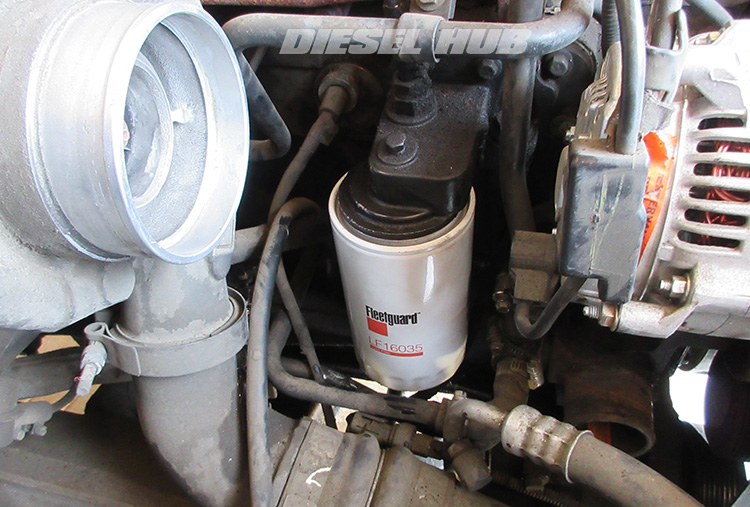
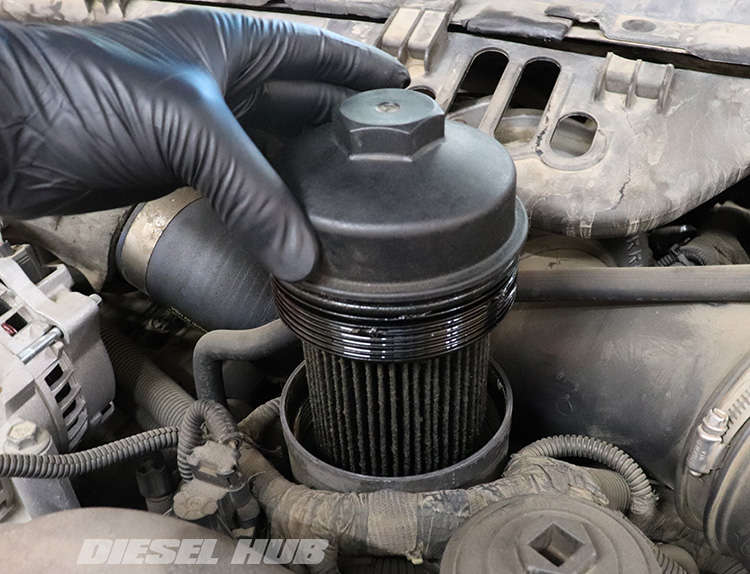
This dilemma is only applicable to spin-on type oil filters that are mounted vertically or semi-vertically with the opening positioned at the top-most point. Common sense dictates that an oil filter that is mounted horizontally or upside down cannot be pre-filled because the vast majority of the oil will spill out during installation. It is not common practice to prefill the reservoir of cartridge type filters because it is difficult to judge the displacement of the filter element once it is inserted and spilling is highly likely. Therefore, for the purposes of this article, vertically mounted spin-on filters will be the focus.
Arguments For & Against
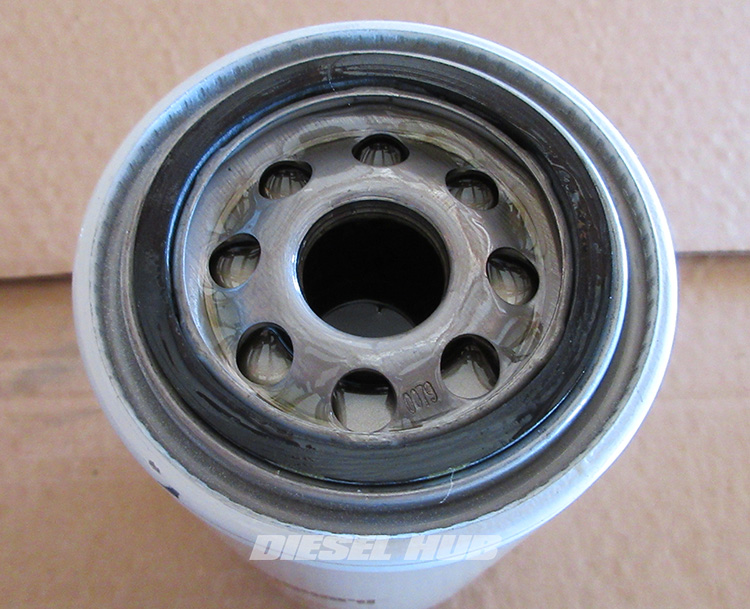
On a traditional spin-on type full flow oil filter the center channel is the outlet and the smaller outer openings are the inlets. Unfiltered motor oil is pumped into the outer portion of the canister, through the filter element, and returns to the engine out of the center pathway. When the filter is changed and a new filter is installed dry, the filter must fill with oil and evacuate the air trapped inside before the oil galleries will begin to receive oil. There is therefore a brief or even momentary period of time that the engine is cranking or running wherein there is no lube oil flow through the oil galleries. Theoretically, the larger the filter is (in oil capacity) the more engine revolutions required to prime the system. This brief lapse in lube oil supply is referred to as a "dry start".
Proponents - those who suggest prefilling an oil filter is a necessity or requirement - argue that dry starts should be prevented at all costs because wear is significantly accelerated when an engine is run without any oil flow, even for a brief period.
Opponents - those who suggest oil filters should not be pre-filled - argue that the brief lapse in oil flow is outweighed by the risk of sending contaminants in unfiltered oil through the main oil galleries.
Both lines of reasoning are well grounded in that they address real concerns. Unfortunately, manufacturers are fairly quiet on the subject and most provide little guidance.
Manufacturer Guidance
Most owner, operator, and workshop manuals do not make any remarks with regard to prefilling of an engine oil filter. This is irrelevant for many engines due to oil filter type or mounting position. The opinions that were immediately available are as follows:
"CAUTION - the lack of lubrication during the delay until the filter is pumped full of oil at start-up can damage the engine. Fill the filter with clean 15W-40 oil."
Source: Cummins B3.9, B4.5, B5.9 Service Manual (Volume 2, 2013 revision)"Fill the lubricating oil filter with clean engine oil."
Source: Cummins ISX14 Operation and Maintenance Manual, 2012 edition"Fill new oil filters with clean engine oil and lightly coat the filter seal."
Source: Detroit Diesel 60 Series Workshop Manual, 2000 edition"Add clean engine lubricating oil to the new cannister. Give the oil time to fill the cannister through the filter element."
Source: Perkins 200 Series workshop manual"Do not fill the oil filters with oil before installing them. This oil would not be filtered and could be contaminated."
Source: Caterpillar C15 & C18 Operators Manual, 2014 edition
This is obviously not a comprehensive list, but Cummins, Perkins, and Detroit Diesel suggested prefilling the oil filters for the applicable engines. Caterpillar was the only OEM that offered guidance against prefilling the oil filter. I presume there are others, but this represents what was available in my own library of service material. Remarks on the subject seem to be absent more frequently than not.
Recommendations
When I assess the risk myself, I side with the proponents; when it comes to spin-on oil filters, I prefill them with rare exception. If the filter is mounted vertical or near vertical at an angle that will allow it to be installed at least half full, I take the initiative to prefill it just before installation. If the filter is in a difficult to access location and there is a risk of picking up debris (engine grime, for example) it's going to happen whether there is oil in the filter or not.
When I buy motor oil, I expect it to come out of a sealed container in a condition that is suitable for service as-is. I do not expect brand new oil to require filtering before it is acceptable to circulate through the engine. I also take great care in avoiding secondary contamination by avoiding reusable oil dispensing containers; new oil is poured through the clean container it was packaged in and into the oil filter. Furthermore, I find it highly more likely that contamination will occur while cleaning the filter base (rag fibers catching threads, for example) than through the process of filling the filter with oil.
A brief dry start does not necessarily alarm me and it is unavoidable on many engines, but there is a good reason that oil filters and oil filter housings incorporate anti-drain back mechanisms; to prevent repeated dry starts. Oil pressure begins to build when the engine is cranked over and continues to build once the engine is started, but it certainly does not stabilize or reach an equilibrium state immediately. At the same time, lubrication is critical - an engine will not run long without oil flow. If a dry start is preventable, that is the pathway that I will choose.
With that said, I recommend following the engine manufacturer's recommendations. If no guidance is presented, I hope you now have the resources necessary to weigh the options and make a decision that is comfortable to you.