
Biodiesel is not compatible with certain materials and thus engine and vehicle manufacturers have historically provided guidance on its usage in their products. Brass, for example, can form gums and varnishes as it deteriorates in the presence of biodiesel. One of the greatest challenges facing biodiesel, however, is its limited storage life; it needs to be consumed promptly as it oxidizes and degrades relatively quickly.
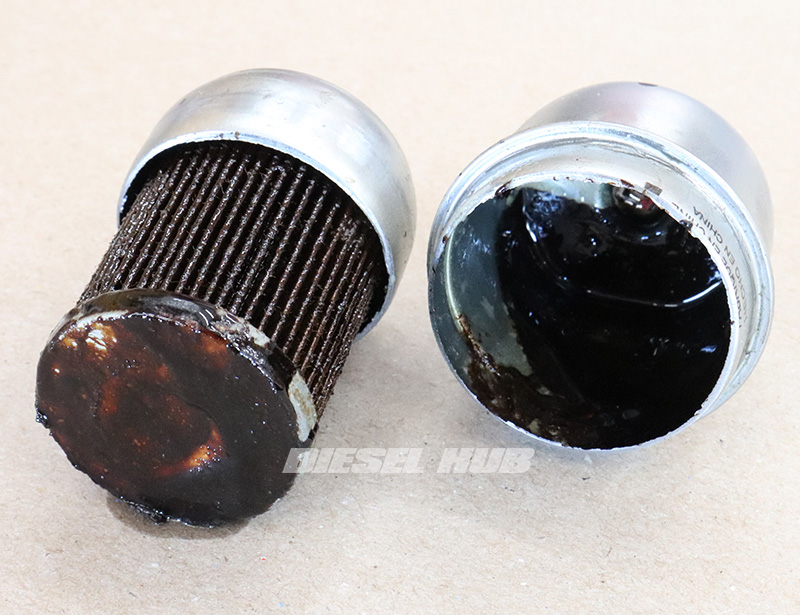
Note that renewable diesel is not biodiesel and is not bound by the same guidelines; it is a drop-in replacement for conventional diesel fuel so long as it has not been blended with biodiesel. If there is biodiesel present in a renewable diesel blend, the manufacturer's biodiesel guidelines remain in effect. Be forewarned, however, that biodiesel reacts negatively with renewable diesel fuel and its storage life is quite short.
Failure to comply with a manufacturer's biodiesel guidelines may result in warranty claim denial due to fuel contamination/use of incompatible fuel, premature component failure, fuel leaks, and potentially expensive repairs. Continuous, long-term biodiesel use and storing biodiesel for extended periods are likely to cause the most notable problems, as opposed to in-frequent or occasional use outside the manufacturer's guidance.
The following sections outline biodiesel guidelines for various engines found in past and current vehicles manufactured by Ford, GM, Dodge/Ram, and Nissan. In each instance the manufacturer's guidance has been pulled from the applicable owners manual or supplemental diesel manual.
Ford Motor Company
International 6.9L & 7.3L IDI Engines
- No manufacturer guidance provided
- Biodiesel is not approved for use in this engine family
- Engine is found in the following models:
- 1983 - 1994 Ford F-250, F-350, F-Super Duty
- 1983 - 1993 Ford E-250
- 1983 - 1994 Ford E-350
7.3L Power Stroke Engines
- No manufacturer guidance provided
- Biodiesel is not approved for use in this engine family
- Engine is found in the following models:
- 1994.5 - 1997 Ford F-250, F-350, F-Super Duty
- 1999 - 2003 Ford F-250, F-350, F-450, F-550 Super Duty
- 2000 - 2003 Ford Excursion
- 1995 - 2003 Ford E-350, E-Super Duty, E-450, E-550
- 2000 - 2003 Ford F-650, F-750 medium duty
6.0L Power Stroke Engines
- No manufacturer guidance provided for 2003 and 2004 model year engines
- Biodiesel is not approved for use in 2003 and 2004 engines; the fuel conditioning module contains materials that are not compatible with biodiesel
- Maximum B5 biodiesel blend approved for 2005 and newer engines, the fuel heater was removed from the fuel conditioning module to permit B5 use; biodiesel used in the blend must meet ASTM D6751 standards
- Biodiesel should be avoided in the following models with a 6.0 liter Power Stroke engine:
- 2003 - 2004 Ford F-250, F-350, F-450, F-550 Super Duty
- 2003 - 2004 Ford Excursion
- 2004 Ford F-350, E-450
- The following models with a 6.0 liter Power Stroke engine are approved for biodiesel blends up to 5%:
- 2005 - 2007 Ford F-250, F-350, F-450, F-550 Super Duty
- 2005 Ford Excursion
- 2005 - 2010 Ford E-350, E-450
6.4L Power Stroke Engines
- Maximum B5 biodiesel blend approved for all engines
- Biodiesel used in the blend must meet ASTM D6751 standards
- The following models with the 6.4 liter Power Stroke engine are approved for biodiesel blends up to 5%:
- 2008 - 2010 Ford F-250, F-350, F-450, F-550 Super Duty
6.7L Power Stroke Engines
- Maximum B20 biodiesel blend approved for all engines
- Biodiesel used in the blend must meet ASTM D6751 standards
- Ford warns not to store biodiesel in the fuel tank for more than 1 month
- Applies to any vehicle equipped with the 6.7 liter Power Stroke engine, including:
- 2011 and newer Ford F-250, F-350, F-450, F-550, F-600, F-650, F-750 Super Duty
3.2L Power Stroke Engines
- Maximum B20 biodiesel blend approved for all engines
- Biodiesel used in the blend must meet ASTM D6751 standards
- Ford warns not to store biodiesel in the fuel tank for more than 1 month
- The following models equipped with the 3.2 liter Power Stroke engine are approved for biodiesel blends up to 20%:
- 2015 - 2019 Ford Transit
3.0L Power Stroke Engines
- Maximum B20 biodiesel blend approved for all engines
- Biodiesel used in the blend must meet ASTM D6751 standards
- Ford warns not to store biodiesel in the fuel tank for more than 1 month
- The following models equipped with the 3.0 liter Power Stroke engine are approved for biodiesel blends up to 20%:
- 2018 - 2021 Ford F-150
General Motors
6.2L & 6.5L Detroit Engines
- No manufacturer guidance provided for GM 6.2 and 6.5 liter diesel engines
- Biodiesel is not approved for use in this engine family
- Engine found in the following models (not a comprehensive list):
- 1982 - 1986 C/K 10, 20, 30 series pickup trucks
- 1988 - 2000 C/K 1500, 2500, 3500 series pickup trucks
- 1982 - 1993 Chevrolet/GMC P20, P30 chassis
- 1992 - 2000 Chevrolet Suburban/GMC Yukon
- 1992 - 2002 Chevrolet/GMC C3500HD chassis cab
- 1994 - 1997 Chevrolet/GMC Vans
- 1995 - 1999 Chevrolet Tahoe
- Common marine engine in a variety of vessel size and types
6.6L Duramax Engines
- Maximum B5 biodiesel blend approved for 2003 to 2010 engines
- Maximum B20 biodiesel blend approved for 2011 and newer engines
- No biodiesel guidance is provided for 2001 and 2002 engines
- In all instances biodiesel used in the blend must meet ASTM D6751 standards
- GM does not recommend using fuel blends with a biodiesel concentration in excess of 20% (B20) under any circumstances
- The following models equipped with a 6.6 liter Duramax diesel are approved for biodiesel blends up to 5%:
- 2003 - 2010 GMC Sierra 2500HD, 3500HD
- 2003 - 2010 Chevrolet Silverado 2500HD, 3500HD
- The following models equipped with a 6.6 liter Duramax diesel are approved for biodiesel blends up to 20%:
- 2011 - 2026 GMC Sierra 2500HD, 3500HD
- 2011 - 2026 Chevrolet Silverado 2500HD, 3500HD
2.8L Duramax Engines
- Maximum B20 biodiesel approved for all 2.8 liter Duramax engines
- GM does not recommend using fuel blends with a biodiesel concentration in excess of 20% (B20) under any circumstances
- The 2.8 liter Duramax diesel is found in the following models:
- 2016 - 2022 Chevrolet Colorado
- 2016 - 2022 GMC Canyon
- 2017 - 2022 Chevrolet Express 2500, 3500
- 2017 - 2022 GMC Savana 2500, 3500
3.0L Duramax Engines
- Maximum B20 biodiesel approved for all 3.0 liter Duramax engines
- GM does not recommend using fuel blends with a biodiesel concentration in excess of 20% (B20) under any circumstances
- The 3.0 liter Duramax diesel is found in the following models:
- 2020 - 2027 Chevrolet Silverado 1500
- 2020 - 2027 GMC Sierra 1500
- 2021 - 2024 Cadillac Escalade
- 2021 - 2027 Chevrolet Tahoe
- 2021 - 2027 Chevrolet Suburban
- 2021 - 2027 GMC Yukon
Dodge/Ram Trucks
5.9L Cummins 6BT Engines
- No manufacturer guidance provided
- Biodiesel is not approved for use in this engine family
- Engine found in the following models:
- 1989 - 1998 Dodge Ram 2500, 3500
5.9L Cummins ISB Engines
- Biodiesel is not approved for use in 2004 and prior engines
- Maximum B5 biodiesel blend approved for 2005 to 2007 engines
- Biodiesel used in the blend must meet ASTM D6751 standards
- Biodiesel should be avoided in the following models equipped with a 5.9 liter Cummins ISB engine:
- 1998 - 2004 Dodge Ram 2500, 3500
- The following models equipped with a 5.9 liter Cummins turbodiesel are approved for biodiesel blends up to 5%:
- 2005 - 2007 Dodge Ram 2500, 3500
6.7L Cummins Engines
- Maximum B5 biodiesel blend approved for 2007 to 2012 engines
- Maximum B20 biodiesel blend approved for 2013 and newer engines
- In all instances biodiesel used in the blend must meet ASTM D6751 standards
- The following models equipped with a 6.7 liter Cummins turbodiesel are approved for biodiesel blends up to 5%:
- 2007 - 2012 Ram 2500, 3500, 4500, 5500
- The following models equipped with a 6.7 liter Cummins turbodiesel are approved for biodiesel blends up to 20%:
- 2013 - 2027 Ram 2500, 3500, 4500, 5500
3.0L EcoDiesel Engines
- Maximum B5 biodiesel approved for all 3.0 liter EcoDiesel engines
- Biodiesel used in the blend must meet ASTM D6751 standards
- The 3.0 liter EcoDiesel is found in the following models:
- 2014 - 2023 Ram 1500
- 2014 - 2019 Jeep Grand Cherokee
- 2021 - 2023 Jeep Wrangler & Gladiator
Nissan
5.0L Cummins ISV
- Maximum B10 biodiesel approved for all 5.0 liter Cummins engines
- Biodiesel fuel blend must meet ASTM D7467 standards
- Nissan's guidance advises against storing biodiesel in the fuel tank for more than 1 month
- The 5.0 liter Cummins diesel is found in the following models:
- 2016 - 2019 Nissan Titan XD


Editor, Diesel Hub